Traditional Search Engine Optimization (SEO) was built on a straightforward exchange: a user typed keywords into a search box, a search engine returned ten blue links, and marketers competed for top rankings to capture organic clicks.
That playbook is changing dramatically. Search behavior has shifted from link discovery to direct answer engine synthesis. Tools like ChatGPT, Google Gemini, and Perplexity answer complex queries inline, synthesising content from multiple authoritative sources without requiring a click-through.
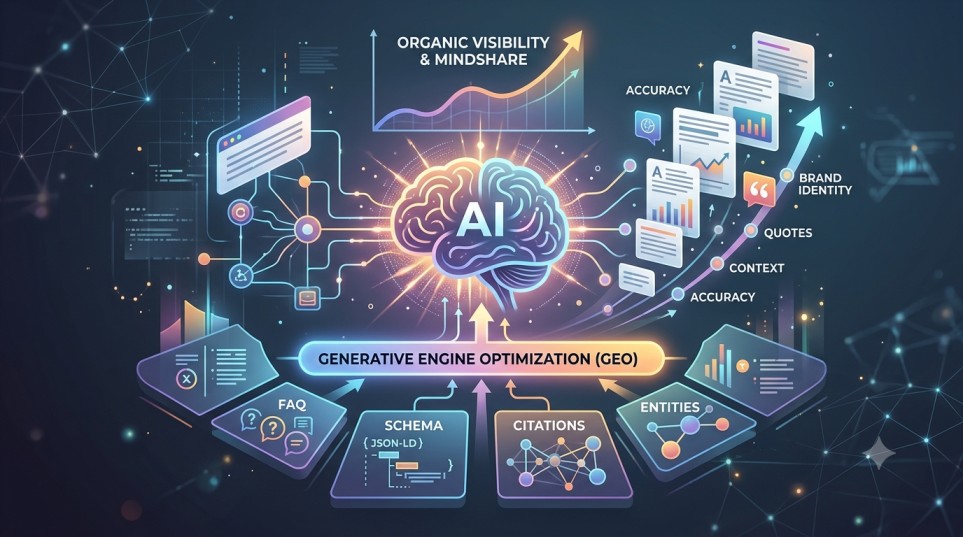
This shift has given rise to Generative Engine Optimization (GEO)—the discipline of optimizing digital content so that artificial intelligence models cite, reference, and prioritize your brand in AI-generated answers.
+-----------------------------------------------------------------------+
|                             THE PARADIGM SHIFT                        |
+-----------------------------------------------------------------------+
|  TRADITIONAL SEO                      GENERATIVE ENGINE OPTIMIZATION   |
|  - Ranks static web pages             - Cites brand sources in LLMs   |
|  - Focuses on keywords & links        - Focuses on entities & context |
|  - Target: Capture website clicks     - Target: Capture mindshare     |
+-----------------------------------------------------------------------+
1. What is Generative Engine Optimization (GEO)?
Generative Engine Optimization (GEO) is the process of structuring, contextualizing, and distributing content to ensure Large Language Models (LLMs) parse and cite your website as an authoritative source during information retrieval.
While standard SEO aims to optimize pages for crawling and indexation algorithms, GEO optimizes content for retrieval-augmented generation (RAG) pipelines. RAG architecture queries real-time web databases to supplement an LLM’s static training data with accurate, current information.
Key Differences Between SEO and GEO
| Strategy Aspect | Traditional SEO | Generative Engine Optimization (GEO) |
| Primary Metric | Organic Traffic, Clicks, SERP Rank | Citation Rate, AI Share of Voice, Brand Mentions |
| Primary Audience | Search Engine Web Crawlers | LLM Retrieval Agents & RAG Systems |
| Content Format | Long-form blog posts, targeted landing pages | Structured data, clear facts, Q&A blocks, expert quotes |
| Core Value | Keyword density, backlink quantity | Entity authority, factual clarity, brand consensus |
2. Why GEO Matters for Modern Digital Marketing
Search engines are increasingly serving direct answers rather than redirecting traffic. As AI search market share expands, relying exclusively on organic click-throughs leaves marketing funnels vulnerable.
-
The Rise of Zero-Click Searches: When AI systems provide complete answers directly on the search interface, user intent is satisfied immediately. Appearing as a cited source within that AI answer preserves brand visibility.
-
High-Intent AI Discovery: Users interacting with conversational search engines are often further along in the buyer decision journey, asking specific, complex, and multi-layered questions.
-
Consensus and Brand Safety: If an AI model synthesizes market summaries without including your business, your brand remains absent from consideration sets generated for prospective buyers.
3. Core Pillars of a Successful GEO Strategy
Optimizing for generative search engines requires a shift from optimizing for keyword frequency to establishing authoritative entity coverage.
                 +-----------------------------------+
                 |     GEO CONTENT ARCHITECTURE      |
                 +-----------------------------------+
                                   |
         +-------------------------+-------------------------+
         |                         |                         |
         v                         v                         v
+------------------+     +------------------+     +------------------+
| Direct-Answer    |     | Entity & Schema  |     | Off-Page Brand   |
| Architecture     |     | Optimization     |     | Consensus        |
| - FAQ Formats    |     | - JSON-LD        |     | - Digital PR     |
| - Concise Definitions| | - Named Entities |     | - Third-Party Reviews|
+------------------+     +------------------+     +------------------+
Pillar A: Direct-Answer Architecture
Generative engines evaluate context quickly. Structuring pages to answer core queries in clear, authoritative statements increases the likelihood of retrieval.
-
Lead with Direct Definitions: Place short, 2–3 sentence answers directly under headers before elaborating on complex topics.
-
Format for Parsing: Utilize bulleted lists, comparative tables, and clear sequential steps, which LLM parsing agents can easily process.
-
Integrate Q&A Schemas: Structure content using explicit Question-and-Answer formats that align with conversational queries.
Pillar B: Entity Optimization & Semantic Context
AI models operate through knowledge graphs—networks of interconnected entities (people, places, concepts, and brands).
-
Use Explicit Naming: Replace ambiguous pronouns (“our platform,” “the service”) with named entities (“BrandX Analytics Engine”) to reinforce associations within the model.
-
Implement Structured Data: Maintain JSON-LD schema markup (such as
Article,Product,Organization, andFAQPage) to clearly communicate page context to search engines.
Pillar C: Off-Page Brand Consensus
RAG platforms do not evaluate websites in isolation; they verify information across the broader web.
-
Third-Party Citation Signals: References across industry news outlets, authoritative blogs, and review platforms build the external consensus LLMs rely on for verification.
-
Digital PR and Co-Mentions: Securing mentions alongside top competitors in industry roundups signals to LLMs that your brand belongs in relevant response sets.
4. Step-by-Step Implementation Framework
To align your existing content engine with Generative Engine Optimization, follow this sequence:
-
Audit Current Brand Mentions in AI Engines
Test your primary product category prompts in engines like ChatGPT, Gemini, and Perplexity. Document whether your brand is cited, how it is described, and which competitors dominate the citations.
-
Refactor Top-Performing Informational Pages
Identify top-performing organic pages and add concise summary blocks, explicit key takeaways, and relevant comparative tables.
-
Incorporate Data, Original Studies, and Technical Terms
Generative models prioritize sources that present unique statistics, original survey results, or expert commentary over generic summaries.
-
Maintain Schema Consistency
Verify that your organization’s name, product lines, key personnel, and core services are mapped accurately across structured data and external platforms.
Frequently Asked Questions About GEO
Will Generative Engine Optimization replace traditional SEO entirely?
No. Traditional SEO remains critical for technical site health, indexation, local search visibility, and transactional intent. GEO operates as an additional layer on top of modern technical SEO foundations.
How do search platforms measure GEO success?
Success in GEO is tracked through AI Share of Voice (SoV), citation frequency in generated responses, referral traffic from conversational discovery engines, and brand lift in unbranded AI queries.